

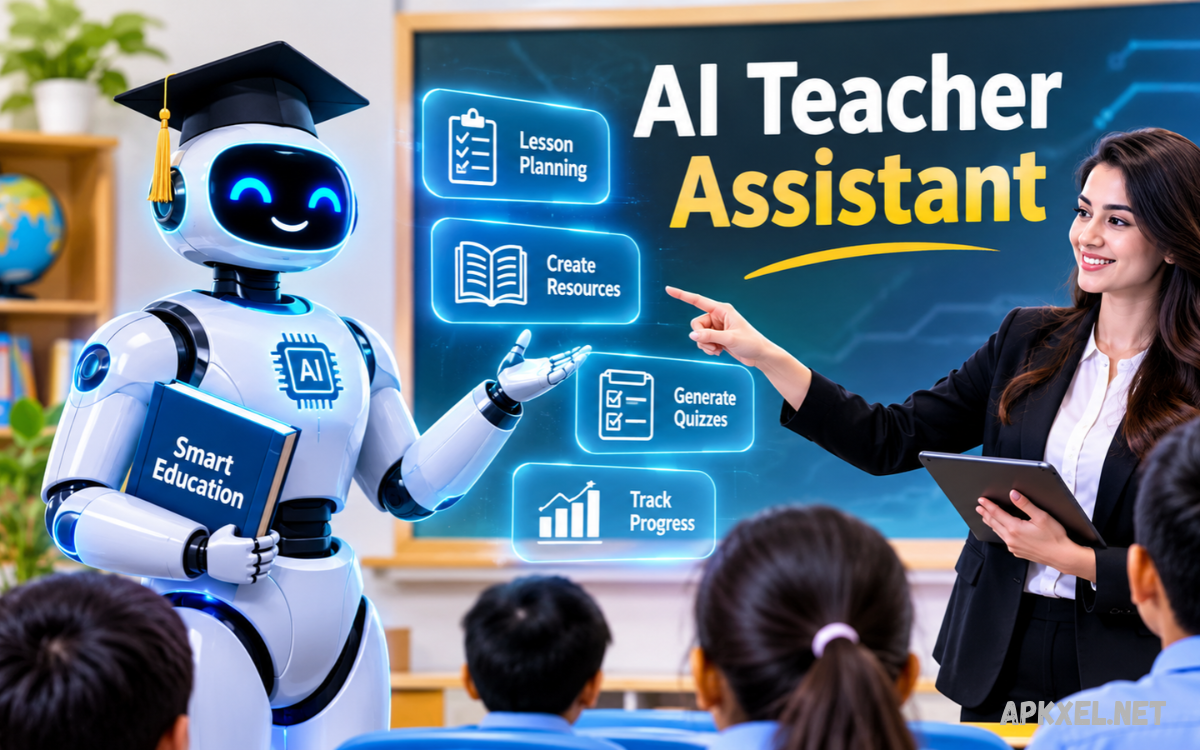
An AI Teacher Assistant is an intelligent digital tool that supports teachers with daily educational tasks. It uses artificial intelligence to simplify lesson planning, prepare learning materials, create assessments, and provide personalized support for students.
Modern education increasingly depends on digital technology. Teachers manage multiple responsibilities, including classroom instruction, grading, communication, and tracking student progress.
What Is an AI Teacher Assistant?
An AI Teacher Assistant is a software-based educational tool that uses artificial intelligence to help educators complete academic and administrative tasks. It can generate lesson ideas, explain difficult concepts, prepare quizzes, and organize classroom activities.
These assistants use technologies such as natural language processing and machine learning. Teachers can enter instructions or questions, receive relevant suggestions, and adapt generated materials according to classroom requirements.
How Does an AI Teacher Assistant Work?
An AI Teacher Assistant processes written instructions and identifies the user’s educational requirements. Teachers can request lesson outlines, classroom exercises, explanations, assessment questions, or educational summaries.
The system analyzes the request and generates relevant content using its trained AI models. Some platforms also support document analysis, voice interactions, and educational integrations, depending on available features.
Importance of AI Teacher Assistants in Modern Education
Educational institutions face increasing demands for personalized instruction and efficient classroom management. Teachers often spend considerable time preparing resources and handling repetitive responsibilities instead of concentrating entirely on student engagement.
AI Teacher Assistants introduce practical ways to organize these activities. They help educators prepare materials, explore teaching strategies, and manage routine tasks while maintaining teacher involvement in important educational decisions.
Key Features of an AI Teacher Assistant
AI Teacher Assistants offer different features depending on their design and capabilities. Common functions include lesson generation, assessment creation, content summarization, language support, and personalized learning suggestions.
Advanced platforms may also provide writing assistance, classroom activity recommendations, student progress insights, and educational content adaptation. These features help teachers build organized learning experiences for different academic subjects.
AI Teacher Assistant for Lesson Planning
Lesson planning requires teachers to establish learning objectives, select suitable activities, and organize educational materials. An AI Teacher Assistant can generate structured lesson outlines based on subjects, grade levels, and learning goals.
Teachers can request introductions, classroom discussions, practical exercises, and revision activities. Generated plans provide useful starting points, while educators adjust examples, timing, and teaching methods according to student needs.
Creating Educational Materials With AI
Preparing worksheets, presentations, study guides, and classroom activities can require significant preparation time. AI Teacher Assistants help generate educational resources based on specific topics and academic requirements.
Teachers can request vocabulary exercises, reading comprehension activities, discussion questions, and subject summaries. Reviewing generated materials remains important because educational resources must match curriculum standards and classroom expectations.
AI Teacher Assistant for Quiz and Test Creation
Creating assessments helps educators understand student knowledge and identify learning gaps. AI tools can generate multiple-choice questions, short-answer exercises, true-or-false statements, and practice tests.
Teachers can specify topics, difficulty levels, and learning objectives when requesting questions. Reviewing every assessment ensures accuracy, appropriate wording, and alignment with the material covered during classroom instruction.
Personalized Learning Support
Students have different learning preferences, academic strengths, and educational challenges. An AI Teacher Assistant can help teachers prepare alternative explanations and learning activities for students with different levels of understanding.
For example, a teacher can request a simple explanation of a science concept or additional mathematics practice. These resources support differentiated instruction while allowing educators to provide guidance based on individual student progress.
AI Teacher Assistant for Homework Support
Homework provides opportunities for students to practice classroom concepts and strengthen independent learning skills. AI-powered educational tools can help teachers prepare assignments, practice exercises, and revision materials.
Teachers can also generate examples that explain important concepts without replacing independent student effort. Clear assignment instructions and teacher supervision help ensure that AI supports learning rather than completing every academic task.
Simplifying Student Assessment
Student assessment involves reviewing assignments, evaluating understanding, and identifying areas requiring improvement. AI Teacher Assistants can help organize assessment criteria, prepare marking rubrics, and suggest feedback structures.
Some systems can assist with reviewing written responses, although automated evaluations require careful human verification. Teachers should make final grading decisions using academic standards, assignment requirements, and individual student circumstances.
Saving Teachers’ Time
Time management remains an important challenge in education. Teachers regularly prepare classroom resources, answer questions, organize assignments, and complete administrative responsibilities throughout the academic year.
An AI Teacher Assistant can reduce repetitive preparation work through automated content generation and organization. Saved time can support meaningful classroom discussions, student mentoring, creative teaching activities, and professional development.
Improving Classroom Engagement
Student engagement plays an important role in effective education. Interactive discussions, practical exercises, group activities, and relevant examples help learners participate more actively during lessons.
AI tools can suggest classroom games, discussion topics, educational challenges, and creative assignments. Teachers can select activities that match student interests, subject requirements, and available classroom resources.
AI Teacher Assistant for Different Subjects
AI Teacher Assistants can support educators across multiple academic subjects. English teachers may generate grammar exercises, reading activities, vocabulary lists, and writing prompts for different proficiency levels.
Mathematics teachers can prepare practice questions, step-by-step concept explanations, and revision worksheets. Science and history educators can develop summaries, discussion activities, and topic-based assessments.
Supporting Language Learning
Language education requires regular practice in reading, writing, listening, and speaking. AI Teacher Assistants can help teachers prepare vocabulary exercises, grammar activities, conversation examples, and comprehension questions.
Multilingual capabilities may also support translation and simplified explanations. Teachers should review translated content to maintain correct meaning, cultural relevance, and suitable language difficulty.
AI Teacher Assistant for Online Classes
Online education creates different teaching requirements, including digital lesson preparation, student communication, and virtual classroom organization. AI tools can help educators develop presentations, prepare online exercises, and organize learning materials.
Teachers can also use AI-generated discussion prompts and revision activities during virtual lessons. These resources make digital instruction more organized while preserving direct communication between educators and students.
Supporting Students With Different Learning Needs
Inclusive education requires learning materials that accommodate different abilities and educational requirements. AI Teacher Assistants can help educators create simplified instructions, alternative explanations, and structured learning activities.
Teachers may also prepare accessible reading materials and additional practice exercises. Any accommodation should reflect professional judgment and established educational support plans rather than relying entirely on automated recommendations.
AI Teacher Assistant for Classroom Management
Classroom management includes organizing activities, communicating expectations, and maintaining a productive learning environment. AI tools can help teachers create classroom schedules, activity instructions, and behavior expectation documents.
These resources can improve organization and consistency. However, student behavior, classroom relationships, and disciplinary decisions require human understanding, fairness, and direct teacher involvement.
Benefits of Using an AI Teacher Assistant
AI Teacher Assistants offer several advantages for educators and educational institutions. They can simplify lesson preparation, support assessment development, organize educational resources, and provide additional ideas for classroom instruction.
Another important benefit involves flexibility. Teachers can request materials for different subjects, learning levels, and teaching approaches, then modify generated content to suit specific educational objectives.
Limitations of AI Teacher Assistants
Despite their advantages, AI Teacher Assistants have certain limitations. They may generate incorrect information, misunderstand instructions, provide outdated explanations, or produce content that does not match a particular curriculum.
Automated systems also lack the complete emotional awareness and professional judgment required for effective teaching. Educators must review generated information, protect student privacy, and remain responsible for educational decisions.
Read Also: AI Classroom Tools: Transforming Modern Education Through Smart Learning Technology
AI Teacher Assistant and Student Privacy
Educational data can include student names, academic records, assignments, and personal information. Teachers should understand platform privacy policies before entering classroom information into AI-powered services.
Schools should establish clear rules regarding data collection, storage, access, and sharing. Avoiding unnecessary personal information and using approved educational platforms can help protect student confidentiality.
Responsible Use of Artificial Intelligence in Education
Responsible AI adoption requires transparency, accuracy, privacy protection, and human supervision. Teachers should explain appropriate AI usage and establish clear expectations for students completing academic assignments.
AI-generated information should be checked before classroom distribution. Students should also learn how to evaluate AI responses, recognize possible errors, and develop independent research and critical-thinking skills.
Best Ways to Use an AI Teacher Assistant
Teachers can receive better results by providing clear instructions and relevant educational details. Including subject names, grade levels, learning objectives, and preferred activity formats helps produce more useful educational materials.
Reviewing and editing generated content should remain part of every workflow. Teachers can combine AI suggestions with textbooks, classroom experience, and approved curriculum resources to develop effective lessons.
Choosing the Right AI Teacher Assistant
Selecting an appropriate platform requires understanding classroom requirements and available features. Teachers should consider ease of use, educational capabilities, privacy protection, language support, accessibility, and pricing.
A suitable AI Teacher Assistant should provide reliable assistance without creating unnecessary complexity. Testing available features before introducing a platform across an institution can help educators evaluate its practical value.
Free AI Teacher Assistant Tools
Several AI platforms provide free access or limited free plans for educational assistance. These services may help teachers generate lesson ideas, prepare worksheets, summarize educational topics, and develop classroom activities.
Free plans often include usage restrictions or limited advanced features. Teachers should compare current platform terms and privacy policies before selecting tools for regular classroom use.
AI Teacher Assistant for School Administrators
School administrators handle schedules, academic communication, educational documentation, and institutional planning. AI-powered assistants can support the preparation of announcements, meeting agendas, policy drafts, and administrative documents.
These capabilities may improve organizational efficiency across educational institutions. Administrators must still verify important information and ensure that sensitive school records receive appropriate protection.
Future of AI Teacher Assistants
Artificial intelligence is expected to become increasingly integrated into educational technology. Future systems may offer improved personalization, stronger language capabilities, better learning analytics, and more flexible classroom assistance.
However, technology should strengthen the relationship between teachers and students rather than replace it. Human guidance, creativity, encouragement, and professional expertise will remain essential parts of successful education.
AI Teacher Assistant for Professional Development
Teachers need continuous professional development to improve classroom practices and understand changing educational methods. AI assistants can suggest training topics, prepare reflection questions, and organize professional learning activities.
Educators can also use AI to explore alternative teaching strategies and develop subject knowledge. Professional recommendations should be evaluated carefully and compared with trusted educational research and institutional standards.
Common Mistakes When Using AI Teacher Assistants
One common mistake involves accepting generated information without checking its accuracy. AI systems can produce convincing but incorrect answers, making verification essential before using materials in classroom instruction.
Another mistake involves depending on automated tools for every teaching responsibility. Effective education requires direct interaction, thoughtful planning, and individual attention that digital assistants cannot completely provide.
AI Teacher Assistant and the Role of Human Teachers
AI technology can support educational tasks, but teachers remain responsible for guiding student learning. They understand classroom dynamics, recognize emotional needs, encourage participation, and adjust instruction according to real situations.
Human educators also provide mentorship, motivation, and meaningful feedback. Combining professional teaching skills with responsible AI assistance creates opportunities for more organized and engaging educational experiences.
Frequently Asked Questions
What Is an AI Teacher Assistant?
An AI Teacher Assistant is a digital educational tool that uses artificial intelligence to support teachers. It helps with lesson planning, assessment preparation, educational content creation, and classroom organization.
How Can AI Teacher Assistants Help Teachers?
They help educators prepare lessons, create worksheets, generate quizzes, summarize topics, and organize educational resources. These functions can reduce repetitive preparation work.
Can an AI Teacher Assistant Create Lesson Plans?
Yes. Many AI assistants can generate lesson outlines based on subjects, grade levels, learning objectives, and classroom requirements. Teachers should review and customize every generated plan.
Are AI Teacher Assistants Free?
Some platforms offer free access or limited free plans. Advanced features, higher usage limits, and specialized educational capabilities may require paid subscriptions.
Can AI Teacher Assistants Create Quizzes?
Yes. AI tools can generate multiple-choice questions, short-answer exercises, practice tests, and revision activities. Teachers should verify question accuracy before using assessments.
Can AI Replace Human Teachers?
No. AI can support educational activities, but human teachers provide professional judgment, emotional understanding, mentorship, and classroom guidance that remain essential to education.
Is an AI Teacher Assistant Useful for Online Teaching?
Yes. It can help prepare digital presentations, online assignments, discussion questions, and learning materials. These resources can improve organization during virtual classes.
How Does AI Support Personalized Learning?
AI can help teachers create alternative explanations, additional exercises, and learning materials suited to different academic levels. Teachers use these resources to support individual learning requirements.
Is AI Safe for Classroom Use?
AI can be useful when schools select appropriate platforms and establish privacy guidelines. Teachers should avoid sharing unnecessary personal information and verify generated educational content.
What Is the Future of AI Teacher Assistants?
Future AI Teacher Assistants may provide more personalized learning support, improved educational content generation, and advanced classroom organization. Human supervision will remain important for responsible implementation.
Conclusion
An AI Teacher Assistant offers practical support for modern educators by simplifying lesson planning, generating assessments, preparing learning materials, and organizing classroom activities.
Successful implementation requires responsible usage, accurate content verification, and strong privacy practices. AI should function as a supportive educational resource rather than a replacement for professional teachers.
